Ohio State Receives $23 Million Grant to Broaden Early Head Start Services for Young Children
 Formfees
03/02/2025
Formfees
03/02/2025
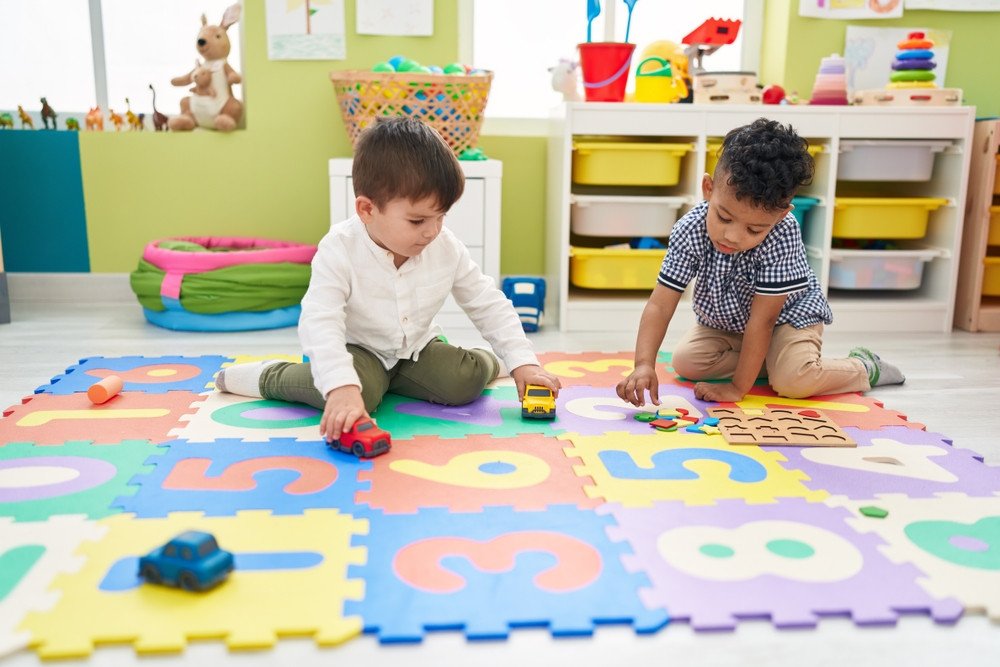

The Ohio State University Early Head Start Partnership Program has received a five-year, $23 million expansion grant from the U.S. Department of Health and Human Services.
The funds will enable the program to add 189 Head Start slots to the program, which currently serves 263 Columbus children and families enrolled in Early Head Start, a more than 70% increase, said Don Fuzer, the program’s principal investigator.
“By adding 189 Head Start child care slots to our existing program, we will create a birth-to-5 model of high-quality early education and services to ensure continuity of care for children and their families,” he said. “We hope to enhance brain development at a crucial time of life and create supportive relationships that will have a long-lasting impact on families.”
Head Start and Early Head Start are free, federally funded programs to promote school readiness for infants, toddlers and preschoolers from
low-income backgrounds. Early Head Start programs support children from birth to age 3, while Head Start programs serve children between 3 and 5 years old.
“We strive to meet the needs of families who live in ZIP codes that have the highest rates of poverty, infant mortality and lack of resources,” said Sherrie Sutton, the program’s executive director. “Our goal is to promote school readiness for the children we serve by engaging parents in their role as primary caregivers while assisting families to become more self-sufficient.”
Cross-collaboration among university departments and community engagement set the Ohio State Early Head Start Program apart from other programs across Ohio and the country, said Melanie Tracy, service integration coordinator with the College of Education and Human Ecology’s (EHE) Schoenbaum Family Center, where the program is based.
“We not only offer early childhood education and child care centers and family child care homes throughout Columbus,” she said, “but our goal is to also work with parents to ensure family stability and to help their economic growth.”
The program provides a host of neonatal services, which has resulted in a zero percent infant mortality rate for expectant mothers who participate in the program, Tracy said.
“We have a natal educator who provides information on breastfeeding and safe sleep, healthy eating and making sure that our moms take care of themselves as much as they take care of their children,” she said.
The program includes a weekly home visit for parents who need support identifying and addressing barriers to their children’s education, Tracy said.
“Twenty-four percent of those families experienced homelessness or housing insecurity last year,” she said. “We are working on making that a much lower statistic.”
The program provides support services to families through partnerships with community agencies and Ohio State colleges and departments including Nursing, Optometry, Speech and Hearing, and the Nisonger Center.
“We work with Nationwide Children’s dental clinic and their health services to provide oral health care to our kids and immunizations as well as wellness checks,” she said. “The Nisonger Center provides mental and behavioral health, as well as early intervention assessments.”
Twenty-nine percent of children served by the Ohio State Early Head Start Program in 2023 had a developmental disability, and program administrators connected parents with comprehensive services, Tracy said.
“These wraparound services are so important for the quality of care and the well-being of our families,” she said. “We offer speech and language assessments to our children to make sure they’re all developmentally moving forward as they should be.”
College of Nursing students work with parents to address stress and mental health issues, said Jennifer Kosla, an assistant professor at the college. The College of Nursing and EHE also offer socialization events at public libraries to give parents an opportunity to share experiences.
“That is so beneficial sometimes just to validate what you’re going through, to share ideas or information,” she said. “Either families can walk to a location or use the bus line. Our students are providing information or education on topics that are important to the families.”
The Ohio State Early Head Start Program has received national attention from the Bipartisan Policy Center in Washington, D.C., for its innovative approach.
“Our families receive support beginning in pregnancy until the child enters kindergarten,” Kosla said. “We like to call it a continuum of care. We have a lot of staff who work with families for years and years, and it’s such a good thing because it builds trust, relationships.”