Trump Proposes “American Academy” Funded by Private University Endowments, Sparking Debate on Education Reform
 Formfees
19/03/2025
Formfees
19/03/2025
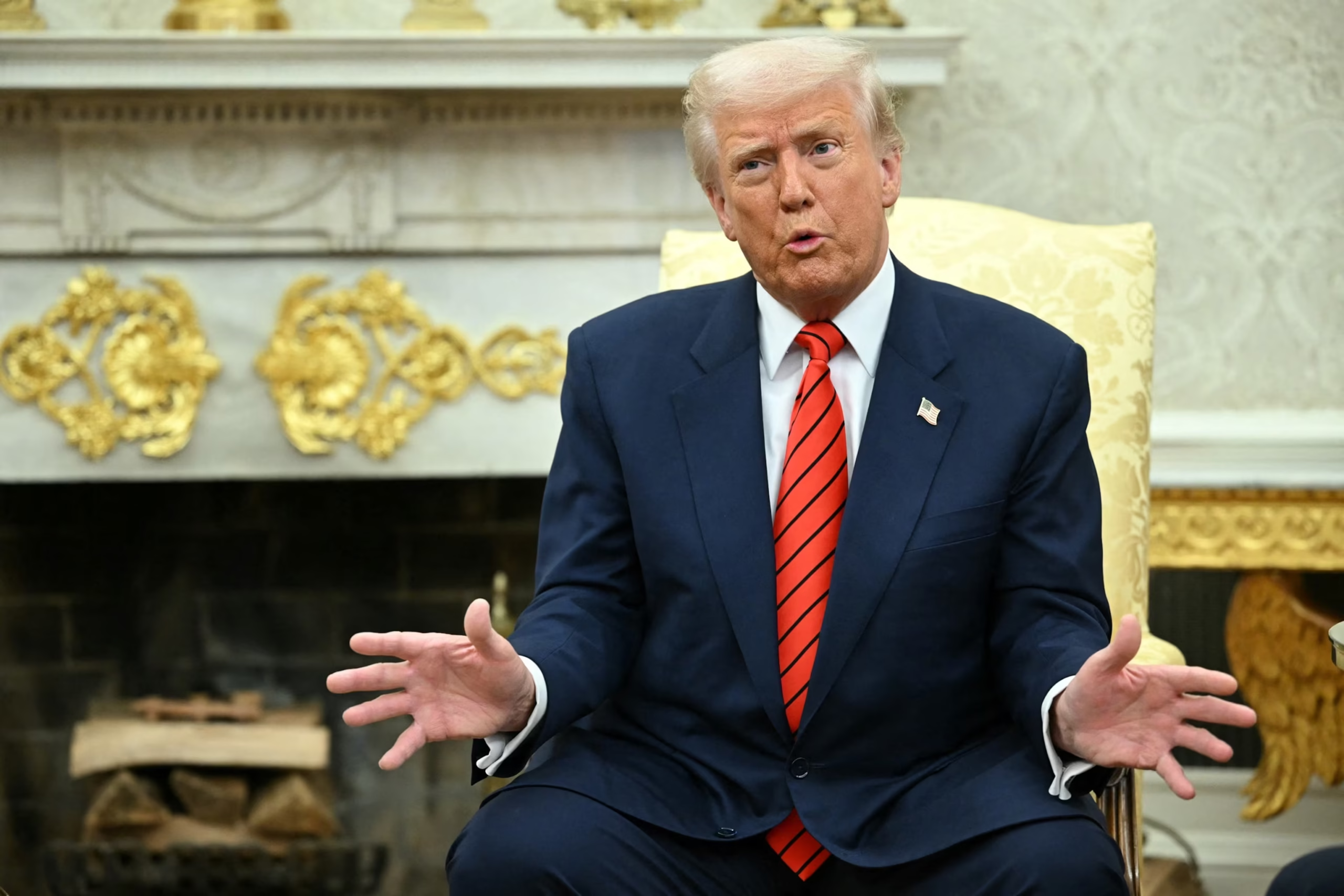
March 19, 2025 – New Delhi, India (10:22 AM IST) – Former U.S. President Donald Trump has unveiled a bold new education initiative, dubbed the “American Academy,” aiming to provide free, world-class education to every American. According to a post on X by user Peter Hawk (@PeterHawk152157), Trump plans to fund this program by redirecting billions from the endowments of wealthy private universities, labeling them as “bloated” and out of touch with American values.
The proposal, highlighted in Trump’s Agenda47 plan and shared widely on social media, suggests taxing or reallocating funds from private university endowments—financial reserves often used to support institutional operations and student financial aid. The move targets institutions accused of harboring ideological bias and antisemitism, aligning with recent criticisms of U.S. higher education for producing politically charged graduates and escalating tuition costs.
Contents
Rising Costs and Public Discontent
The U.S. higher education system has faced mounting scrutiny for its soaring costs, averaging $38,270 per student annually at private institutions, according to recent data. Critics, including Trump supporters, argue that universities have become unaffordable, saddling students with debt while failing to deliver value. Peter Hawk’s post, which has garnered attention on X, claims the initiative will “rip off generation after generation of Americans” by offering a debt-free alternative through the American Academy.
Desiree (@DesireeAmerica4), responding to Hawk’s post, echoed this sentiment, stating, “Big education has been ripping off generation after generation of Americans with ludicrous prices for an often substandard product. This makes so much sense. The University model is broken and too expensive.”
Legal Precedent and Controversy
The proposal draws on existing U.S. tax policy, such as the 2017 Tax Cuts and Jobs Act, which imposes a 1.4% tax on the net investment income of private nonprofit colleges and universities with endowments exceeding $500,000 per student. This tax targets a small group of elite institutions, providing a legal framework for Trump’s plan to tap into these resources.
However, the idea has already drawn skepticism. A 2023 Forbes article described a similar Trump-era proposal for the American Academy as a “boondoggle,” predicting it could become a “wasteful and unkillable money pit” with little appeal to students and poor outcomes. Critics argue that convincing Congress to enact and fund such a program would be challenging, especially given the entrenched interests of established universities.
Broader Context: Education and Ideology
The proposal comes amid growing public discontent with higher education, fueled by concerns over affordability, student debt, and perceived ideological bias on campuses. A recent City Journal article highlighted federal funding cuts looming over universities unless they address issues like antisemitism and partisan radicalism. Trump’s plan appears to capitalize on this sentiment, positioning the American Academy as a counterweight to elite institutions accused of disconnecting from mainstream American values.
Supporters on X, including Pat Siefferman, have praised the idea, while others question its feasibility and potential impact on academic freedom. The debate underscores a polarized view of U.S. higher education, with Trump’s initiative seen by some as a revolutionary step toward accessibility and by others as a politically motivated distraction.
What’s Next?
As of March 19, 2025, the proposal remains in the discussion phase, with no formal legislation introduced. If Trump were to reclaim the White House, the American Academy could become a focal point in his education policy agenda. However, its success would depend on navigating congressional approval, legal challenges, and the complex financial structures of university endowments.
For now, the idea has ignited a firestorm on social media and in policy circles, reflecting broader tensions over the future of higher education in the United States. As discussions continue, stakeholders—students, educators, and policymakers—will weigh the potential benefits of free education against the risks of disrupting a multi-billion-dollar academic ecosystem.