University of Southampton and NIT Rourkela Researchers Assess Mining Dust Impact on Eastern India’s Forests
 Formfees
21/01/2025
Formfees
21/01/2025
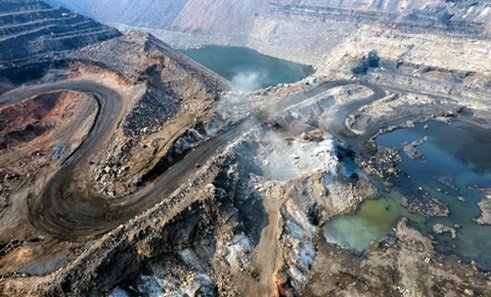

Dust from open cast mining suffocates surrounding forests and inhibits trees’ ability to capture carbon from the atmosphere more than previously thought, according to new research by scientists in India and the UK.
Researchers at the University of Southampton, UK, and the National Institute of Technology in Rourkela, India, have assessed the impact of mining dust on forests in Eastern India, which is home to some of the world’s major open-pit coal mines.
Focusing on the coal mining region of Jharsuguda in Eastern India, the research team studied detailed satellite images to inform its findings. They also collected 300 leaf samples from 30 different sites in Jharsuguda, and found dust deposits containing aluminium, silica and iron on them.
Jadu Dash, Professor of Remote Sensing at the University of Southampton, and Professor Amit Kumar Gorai and Mr Avinash Kumar Ranjan, from the Department of Mining Engineering at the National Institute of Technology, Rourkela, led the research.
Professor Dash said: “Pollution from open cast mines creates a layer of dust that settles on the leaves of trees, making them increasingly less productive and less healthy. We knew this was the case, but we have learned that it is unfortunately worse – and more far spread – than we thought.
“The dust affects trees’ complex physiological processes, hindering their ability to capture carbon dioxide and damaging their overall health.”
Dust from mines that settles on leaves impacts their function, impeding photosynthesis, light interception, nutrient availability, gas-energy exchange, plant-pathogen interactions, and causing physical damage.
Dust particles obstruct the leaves’ stomata, the tiny openings through which plants exchange gases with the atmosphere. This reduces the plant’s ability to capture carbon and release oxygen.
Mining dust is also impacting trees in a wide geographical area, reaching far beyond the immediate vicinity of the mines – up to 30km away from the mines. The highest concentration of negative impact is along transportation routes to and from the mines.
“We used data from multiple satellite sensors to develop a model to map dust level on leaves,” explained Professor Dash. This enabled us to understand the regional impact. Using other satellite-based estimates of vegetation productivity, we found that dust accumulation lead to a reduction in carbon capture and transpiration.
“Our research should provide a solid foundation to inform future environmental management, as well as demonstrate the need for ongoing research to fully understand and mitigate the negative impact of mining on the delicate surrounding ecosystems.”