University of Freiburg Scientists, Led by Dr. Lukas Bruder, Control Quantum States in Helium Atoms Using FERMI Free Electron Laser
 17/01/2025
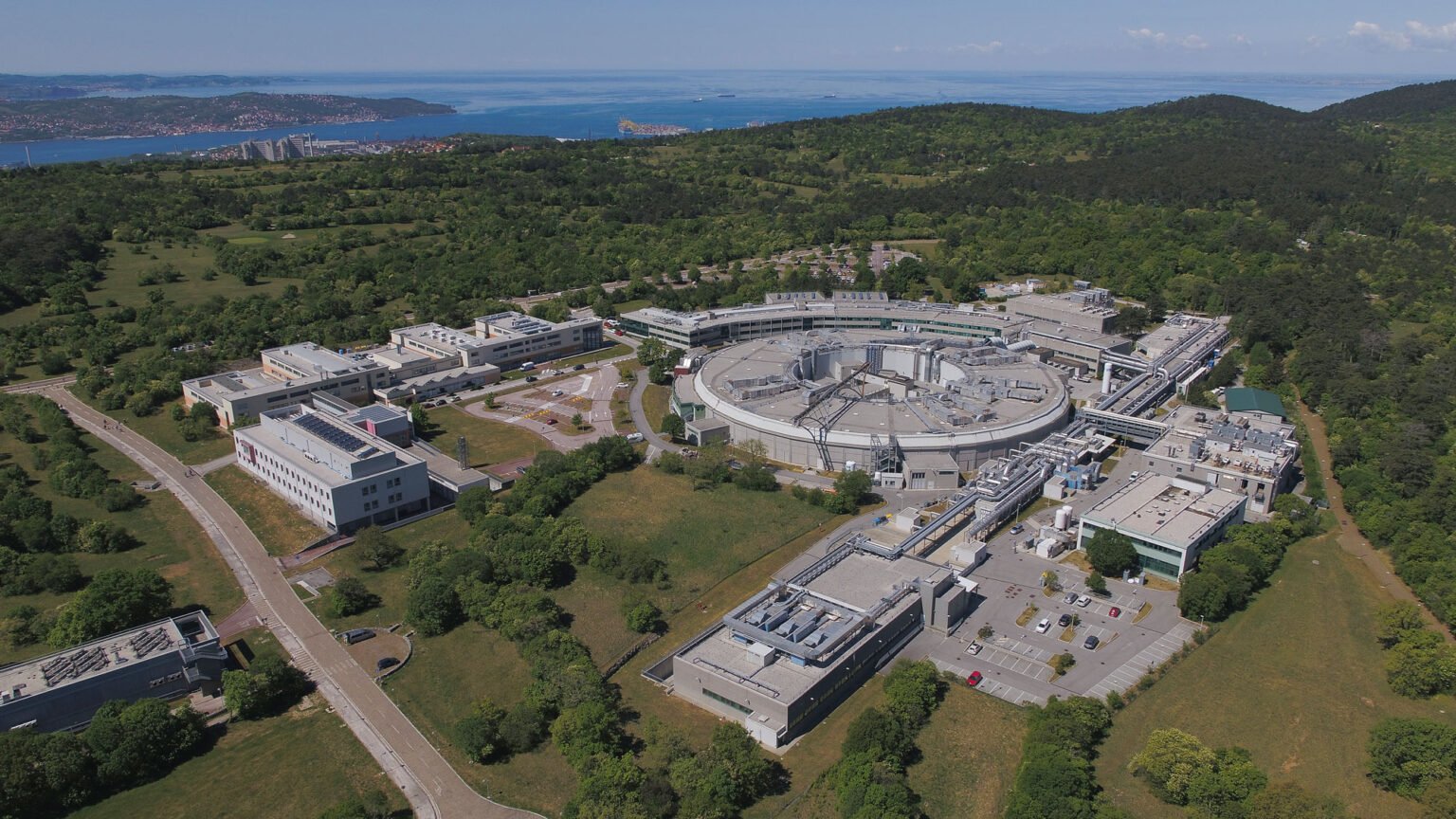

An international team of scientists headed by Dr. Lukas Bruder, junior research group leader at the Institute of Physics, University of Freiburg, has succeeded in producing and directly controlling hybrid electron-photon quantum states in helium atoms. To this end, they generated specially prepared, highly intense extreme ultraviolet light pulses using the FERMI free electron laser in Trieste, Italy. The researchers achieved control of the hybrid quantum states using a new laser pulse-shaping technique. Their results have been published in the journal Nature.
Strong light fields can create new quantum states
As long as electrons are bound to an atom, their energy can only be of certain values. These energy values depend primarily on the atoms themselves. However, if an atom is in the beam of a very intense laser, the energy levels shift. Hybrid electron-photon states are created, known as ‘dressed states’. These occur at laser intensities in the range of ten to a hundred trillion watts per square centimetre. In order to be able to produce and control these special quantum states, laser pulses are necessary that achieve such intensities within a short time window of only a few trillionths of a second.
Free electron laser for producing laser radiation in the extreme ultraviolet range
For their experiment, the scientists used the FERMI free electron laser which allows generation of laser light in the extreme ultraviolet spectral range at very high intensity. This extreme ultraviolet radiation has a wavelength of less than 100 nanometres, which is necessary to manipulate the electron states in helium atoms.
In order to control the electron-photon states, the researchers used laser pulses that dispersed or contracted depending on the scenario. To this end, they adjusted the time lag of the different colour components of the laser radiation. The properties of the laser pulses were controlled using a ‘seed laser pulse’, which preconditioned the emission of the free electron laser.
“Our research enabled us for the first time to directly control these transient quantum states in a helium atom,” says Bruder. “The technique we’ve developed opens up a new field of research: this includes new opportunities for making experiments with free electron lasers more efficient and selective or for gaining new insights into fundamental quantum systems, which are not accessible with visible light. In particular it may now be possible to develop methods to study or even control chemical reactions with atomic precision.”