University of Copenhagen: International Team Drills 2,800-Meter Ice Core, Unveiling 1.2 Million Years of Climate History
 Formfees
18/01/2025
Formfees
18/01/2025
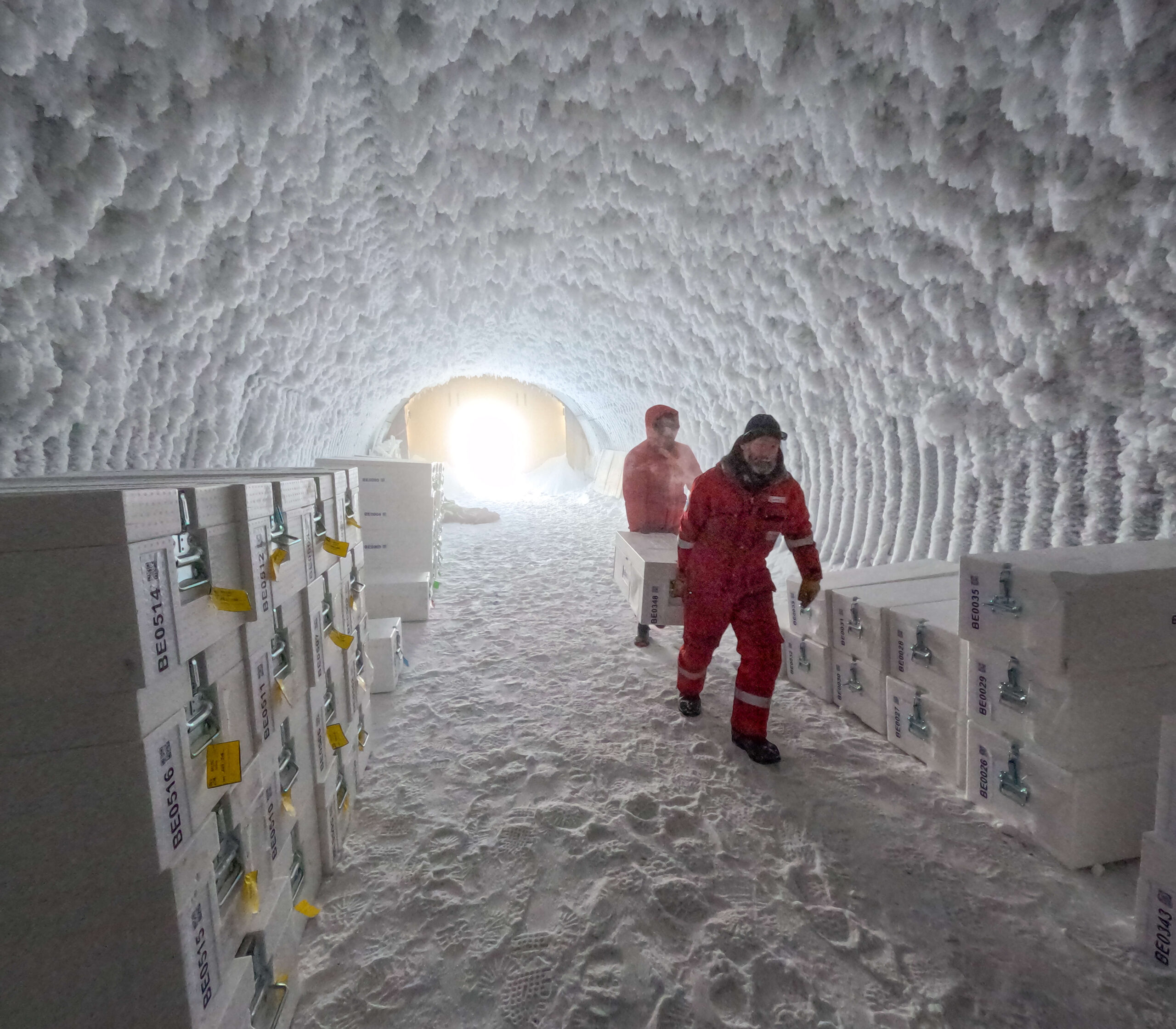

At the remote Little Dome C site in Antarctica, a research team representing twelve scientific institutions from ten European nations has just achieved a historic milestone for climate science.
As part of the European-funded Beyond EPICA – Oldest Ice project, the team successfully concluded a multi-year drilling campaign, reaching the depth of 2,800 meters, where the Antarctic ice sheet meets the bedrock.
The extracted ice preserves an unprecedented record of Earth’s climate history, continuous information on atmospheric temperatures and pristine samples of old air with greenhouse gases spanning over 1.2-million-year-old ice and probably beyond.
Historic moment for climate and environmental science
“This is a great moment for climate and environmental science. This is the longest continuous ice core record of past climate, and we hope it can reveal the interlink between our planet’s carbon cycle and temperature,” comments Dorthe Dahl-Jensen, professor at the University of Copenhagen and the University of Manitoba and chair of the ice core science consortium.
The scientists expect for the first time to unveil critical details about Earth’s climate and atmospheric history that extend beyond 800,000 years ago.
1.2 million years in a high-resolution record
“From preliminary analyses recorded at Little Dome C, we have a strong indication that the uppermost 2480 meters contain a climate record that goes back to 1.2 million years in a high-resolution record where up to 13,000 years are compressed into one meter of ice”, reports Julien Westhoff, chief scientist in the field, postdoc at the University of Copenhagen.
The lowest 210 meters of the ice core consists of probably even older ice that is heavily deformed, possibly mixed or refrozen, and of unknown origin. Advanced analyses could reveal East Antarctica’s glaciation history, which the researchers aim to unravel.
Being able to look more than a million years back in time makes a crucial difference in climate science
Around one million years ago, glacial-interglacial cycles slowed down from 41,000-year to 100,000-year intervals. The reasons behind this shift remain one of climate science’s enduring mysteries. The researchers believe it is linked to greenhouse gases, which they can extract from the trapped air bubbles in the ice.International Team Drills 2,800-Meter Ice Core, Unveiling 1.2 Million Years of Climate History
The ice drilling achievement was made possible through the extraordinary collaboration of various European research institutions and the dedicated work of scientists and logistical personnel in the field over the last ten years.
“Denmark, together with Germany and France, have provided the ice core drill used to drill the ice core and we are very proud of the successfully drilled ice core. It goes beyond our expectations and we are looking forward to tweezing the climate information from the ice cores together with all from the BEOI European team” concludes Dorthe Dahl-Jensen.