Scientists Discover Space Hosts More Hidden Supermassive Black Holes Than Previously Believed
 Formfees
21/01/2025
Formfees
21/01/2025
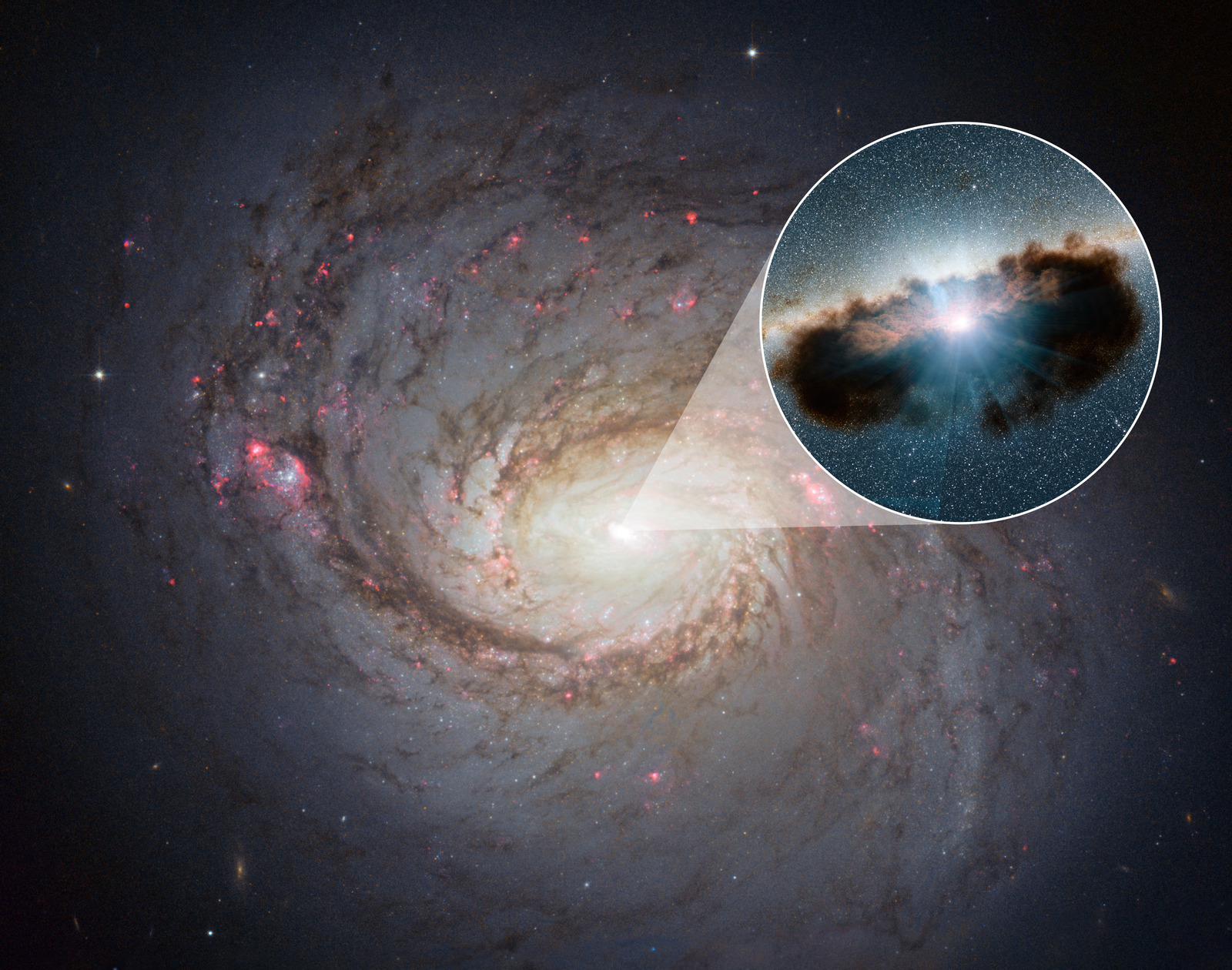

Space scientists say they have found evidence the universe harbours many more supermassive black holes than previously believed.
Experts working with NASA have been searching parts of the cosmos in efforts to estimate the total number of galactic giants.
They found that around 35 per cent of supermassive black holes – some many millions to billions of times heavier than the sun – have been overlooked as they are hiding behind thick clouds of gas and dust.
This is more than some previous estimates of around 15 per cent.
The study was undertaken by astronomers at the University of Southampton who were working with an international team of academics.
Some of these hidden black holes are so heavily obscured that they even block low-energy X-ray light, said paper co-author Professor Poshak Gandhi from Southampton .
He added: “Black holes are the most mysterious objects in the universe and are present everywhere – yet we still don’t fully know how they evolve.
“We’ve found that many more are lurking in plain sight – hiding behind dust and gas rendering them invisible to normal telescopes.
“This is the first time we have a highly-refined census of black holes growing by consuming interstellar material surrounding them.”
The new study was published in the Astrophysical Journal .
Astronomers from Southampton and their international colleagues used data taken from NASA’s InfraRed Astronomy Satellite and the X-ray space telescope NuSTAR.
It allowed them to see the infrared emissions from clouds surrounding supermassive black holes.
Prof Gandhi from Southampton added “Though black holes are dark, surrounding gas heats up and glows intensely, making them some of the brightest objects in the universe.
“Even when hidden, the surrounding dust absorbs and re-emits this light as infrared radiation, revealing their presence. At the same time, X-rays provide a complementary view peering through the veiling gas, much like a medical X-ray scan allows a doctor to peer through to our innards.”
Determining the number of hidden black holes compared to non-hidden ones can help scientists understand how they get so big.
If they grow by consuming material, then a significant number should be surrounded by thick clouds and potentially obscured, said lead author Dr Peter Boorman , formerly of the University of Southampton and now at Caltech.
He added: “Black holes also influence the galaxies they live in – this happens because they are surrounded by massive clouds of gas and dust and can consume vast amounts of material.
“If too much falls toward a black hole, it starts coughing up the excess and firing it back out into the galaxy. That can disperse gas clouds within the galaxy where stars are forming, slowing the rate of star formation.”
“If we didn’t have black holes, galaxies could be much larger,” added Prof Gandhi from Southampton.
“If we didn’t have a supermassive black hole in our Milky Way galaxy, there might be many more stars in the sky. That’s just one example of how black holes can influence a galaxy’s evolution.”