RMIT: Voices of Aboriginal Victims Highlight Need for Structural Changes in Legal and Support Systems
 17/01/2025
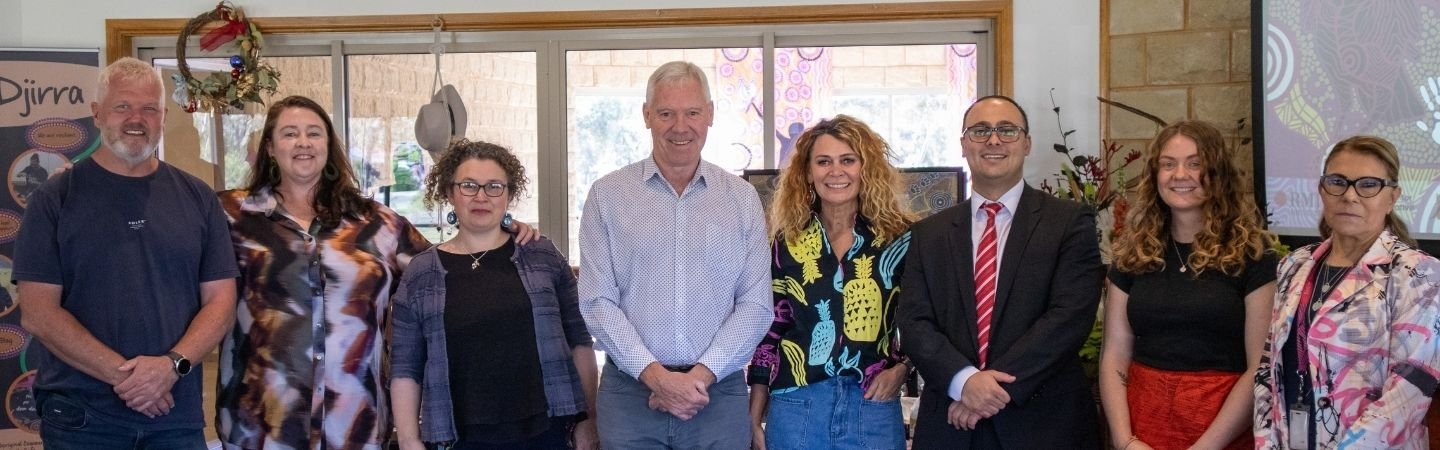

The ‘Ensuring that Aboriginal perspectives inform responses to Aboriginal victims’ report – released today after detailed research by RMIT’s Centre for Innovative Justice (CIJ) in partnership with Djirra, Elizabeth Morgan House Aboriginal Women’s Service and Dardi Munwurro – highlights the structural and systemic challenges that act as barriers to disclosure and reporting for First Nations peoples who have experienced crime.
The report finds that repeated negative and unsafe experiences reinforce mistrust of police and mainstream service systems and create the sense for many Aboriginal communities that support is simply not available.
The report identifies four priority areas for reform:
- Disclosure and reporting
- Service access
- Court processes and
- Building workforce capacity
Elena Campbell, Associate Director of Research, Advocacy and Policy for CIJ and co-author of the report, said that Aboriginal and Torres Strait Islander people are dramatically overrepresented at all stages of the criminal justice system, including as victims of crime.
“Many Aboriginal community members are unlikely to report an experience of crime to authorities given the ongoing impacts of colonisation and systemic discrimination,” she said.
“Where the participants in our research had sought assistance, however, the research shows that short-term, inflexible or culturally unsafe service provision can leave people without much needed support to recover from harm.”
Campbell explained that in contrast, a culturally safe and flexible service system which can offer “choice, self-determination and respond to an Aboriginal person’s wider needs in a holistic way” can provide a much more effective and meaningful path to healing.
Antoinette Braybrook AM, CEO of Djirra, one of the research project partners, emphasised the value of the research that highlights Aboriginal people’s direct experiences.
“This research confirms what Aboriginal people have long known – that we are overrepresented as victims of crime and yet rarely receive support for these experiences,” she said.
“Research that features the voices of Aboriginal people, and particularly Aboriginal women’s experiences of family violence, is long overdue and Government must now step up, listen and act.”
Greater recognition and responses to First Nations peoples’ experiences of crime are vital to advancing Victoria’s fifth Aboriginal Justice Agreement, Burra Lotjpa Dunguludja or ‘Senior Leaders Talking Strong’.
The CIJ and First Nations project partners were commissioned to conduct research into the needs and experiences of Aboriginal victims of crime by the Department of Justice and Community Safety.
The first phase of the project incorporated consultations with representatives from the Aboriginal Justice Caucus, the Aboriginal Justice Agreement’s Women, Families and Victims’ Collaborative Working Group, the network of Regional Aboriginal Justice Advisory Committees, as well as practitioners in Aboriginal-identified service roles.
The second phase involved yarns – either as individual yarns or in yarning circles – with 23 Aboriginal people who had experienced a range of crime types, focusing on their experiences of crime and their subsequent interaction with the justice system and support services. Governed by a First Nations-led steering committee, the research was designed to be consistent with the principle of self-determination.
While major systemic reform was clearly needed, Campbell said that Aboriginal communities already held many solutions in their hands.
“Aboriginal communities and organisations are already supporting people around the impacts of crime in multiple ways, usually without adequate resourcing and recognition,” she said.
“Along with the proposals identified in this report, for which the Aboriginal Justice Agreement and Aboriginal Justice Caucus have long called, First Nations communities and organisations like Djirra, hold the self-determined solutions to respond to these alarming findings and must have better recognition and sustained resourcing to deliver on the solutions which we know work for our people,” said Braybrook.