RMIT Receives $6 Million to Advance Research on First Nations Digital Inclusion
 17/01/2025
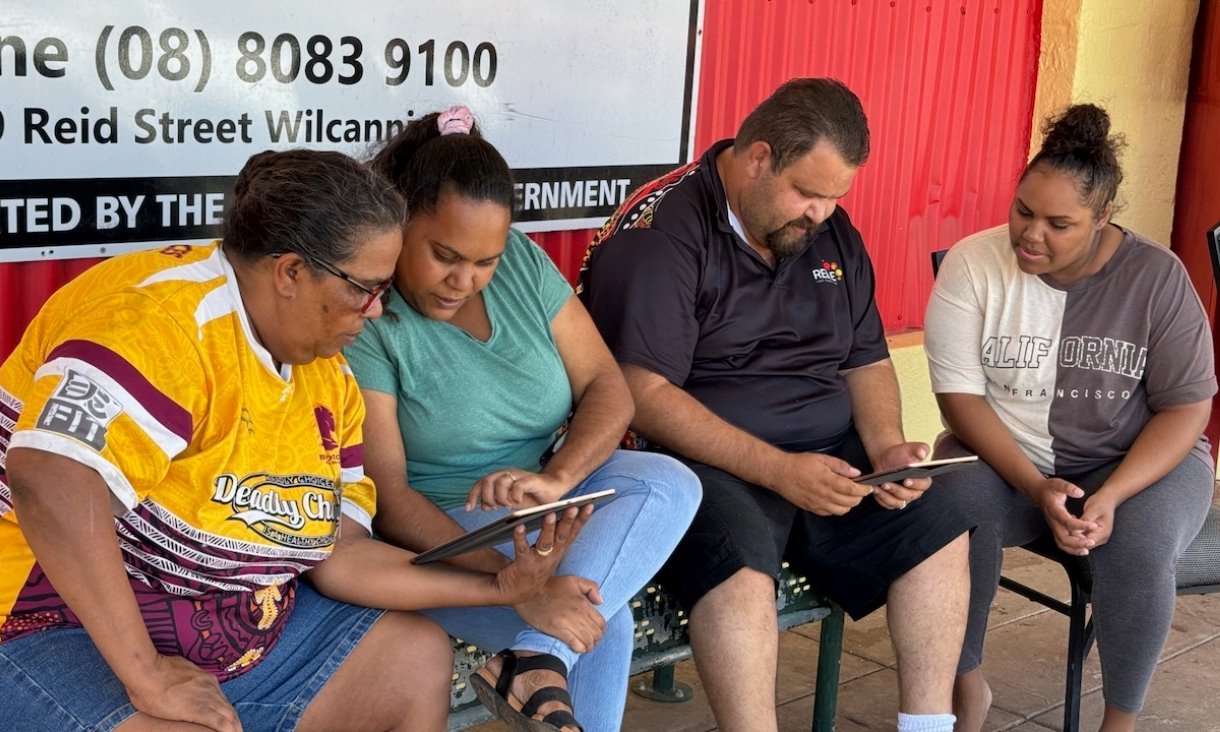

The funding will support a new three-year project, led by RMIT University’s ARC Centre of Excellence for Automated Decision-Making and Society (ADM+S), to collect data on the digital inclusion experiences of First Nations people in urban, regional and remote areas across Australia.
Digital inclusion refers to access to communications services and devices, affordability and digital ability. The digital gap is the difference in levels of digital inclusion between First Nations people and national averages across Australia.
With Target 17 of the National Agreement on Closing the Gap aimed at addressing the uneven levels of digital inclusion amongst First Nations Australians by 2026, ADM+S Director and RMIT Distinguished Professor Julian Thomas said accurate measurement of digital inclusion is needed to track progress.
“There is currently a lack of data to measure the scale and changing nature of digital inclusion amongst First Nations peoples over time,” he said.
“This is largely because First Nations digital inclusion is difficult to capture accurately in national survey approaches.
“Measuring digital inclusion both within and across First Nations communities requires close engagement with the communities themselves, their organisations and leaders.
“It also requires different approaches tailored for urban, regional, rural and remote communities.”
First Nations lead researcher, Associate Professor Heron Loban, said it’s important the research is First Nations led and delivered, while following principles of Indigenous data governance.
“We will be ensuring the data is available to First Nations communities and organisations to use in their own analysis, planning and service delivery,” she said.
The project builds on ADM+S’s existing projects supported by industry partner Telstra: Australian Digital Inclusion Index, which measures digital inclusion across Australia, and Mapping the Digital Gap, which focuses on the digital inclusion experiences of First Nations Australians in remote locations.
The national data collection project was announced by Communications Minister Michelle Rowland at the launch of the First Nations Digital Inclusion Advisory Group’s Roadmap; 2026 and Beyond on 10 December.
The roadmap outlines long-term and community-led strategies for addressing the digital divide and supporting First Nations technological innovation.
RMIT Senior Research Fellow, Dr Daniel Featherstone, said improving digital inclusion and access to services was critically important to ensure informed decision-making and agency among Aboriginal and Torres Strait Islander people.
“Everyone should have the opportunity to benefit from digital technologies,” he said.
“We use these technologies to access essential services for health, welfare, finance and education, participate in social and cultural activities, follow news and media, as well as connect with family, friends, and the wider world.”
A second phase of Mapping the Digital Gap, to be conducted in 10 First Nations communities from 2025–28, will contribute remote data to measure Target 17.