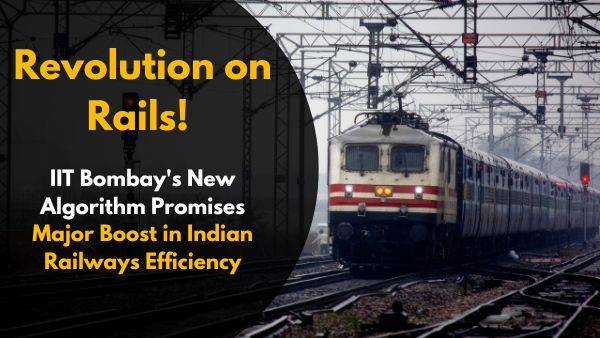
Revolution on Rails! IIT Bombay’s New Algorithm Promises Major Boost in Indian Railways Efficiency—Without Touching Tracks or Trains
 Formfees
18/03/2025
Formfees
18/03/2025
Contents
- 1 Game-Changing Research Could Transform Train Scheduling Forever
- 2 What’s the Innovation?
- 3 Key Highlights
- 4 Why This Matters for Indian Railways
- 5 Expert’s Take
- 6 How Soon Can This Be Implemented?
- 7 Recommended Reads :
- 8 FAQs – IIT Bombay’s Railway Optimization Research
- 9 Stay Updated on More Such Innovations
- 10 Need Help with Railway Exams or Research-Based Courses?
Game-Changing Research Could Transform Train Scheduling Forever
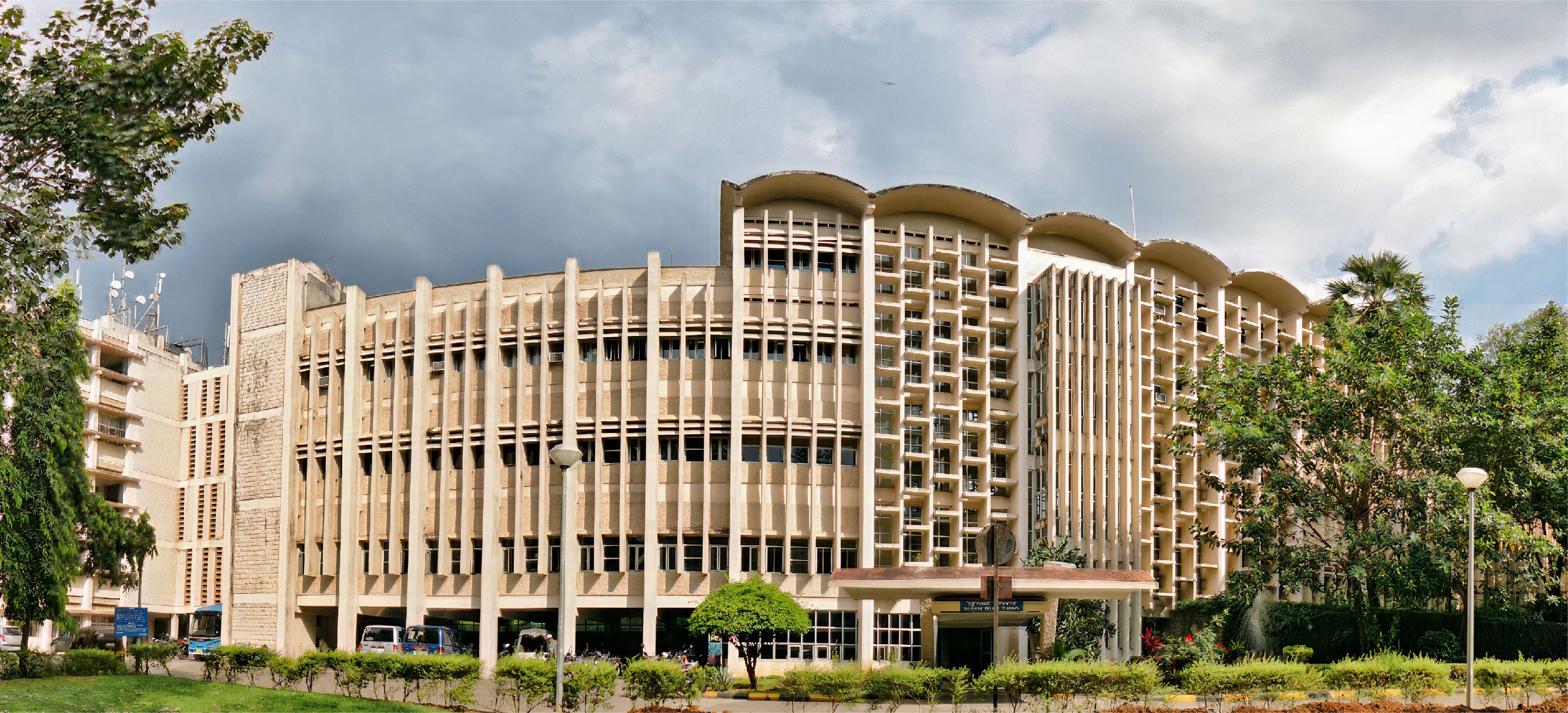
In a breakthrough that could redefine the operational landscape of Indian Railways, a research team from IIT Bombay, in collaboration with Zonal Railways and the Centre for Railway Information Systems (CRIS), has introduced a pioneering scheduling method to streamline railway operations without the need for any physical infrastructure changes.
Led by Prof. Madhu Belur (Department of Electrical Engineering) and Prof. Narayan Rangaraj (Department of Industrial Engineering and Operations Research), the study proposes a software-driven optimization strategy that enhances how trains are scheduled, helping to reduce congestion, save fuel, and improve punctuality.
Read Full Research Highlight from IIT Bombay
What’s the Innovation?
Unlike traditional improvement plans that often demand massive investments in new tracks, trains, or signalling systems, this novel approach focuses on algorithmic scheduling. The proposed model identifies inefficiencies in the current train timetable and suggests subtle, data-driven shifts to achieve:
- Higher throughput on existing infrastructure
- Reduced delays and overlaps in rail traffic
- Smarter utilization of station halts and turnaround times
This solution could be a game-changer for one of the world’s busiest rail networks, especially when scaling is required without the capital expenditure of hardware overhauls.
Key Highlights
| Parameter | Details |
|---|---|
| Institution Involved | IIT Bombay, Zonal Railways, CRIS |
| Lead Researchers | Prof. Madhu Belur, Prof. Narayan Rangaraj |
| Departments | Electrical Engineering & IEOR, IIT Bombay |
| Focus Area | Train scheduling optimization |
| Core Solution | Algorithm-based timetable revision |
| Benefits | Less congestion, improved efficiency, fuel savings |
Why This Matters for Indian Railways
Indian Railways runs over 13,000 passenger trains daily, and even minor inefficiencies can lead to significant delays and financial losses. With infrastructure already under pressure, this research could:
- Maximize the use of current rail assets
- Enhance reliability and punctuality
- Improve passenger satisfaction
- Lower environmental impact through fuel optimization
Expert’s Take
“Our model aims to demonstrate that by just modifying the timetable slightly and intelligently, one can achieve substantial improvements in efficiency without requiring a single new track,” said Prof. Madhu Belur.
How Soon Can This Be Implemented?
The model has already undergone preliminary validation with real-world data from select zones. Discussions are underway to pilot this approach in high-traffic corridors where its impact can be most pronounced.
Recommended Reads :
IIT JAM 2025 Results Declared: Check Your Scores Now at jam2025.iitd.ac.in
Future-Proof University? Why Bangalore’s Chanakya University Is the Smartest Choice for Gen Z.
GATE 2025 Results Coming March 19: Here’s How to Check Your Score and What Comes Next
FAQs – IIT Bombay’s Railway Optimization Research
Q1. What is the core idea of this research?
It’s a timetable optimization algorithm that enhances train efficiency without changing physical infrastructure.
Q2. Who are the lead researchers?
Prof. Madhu Belur and Prof. Narayan Rangaraj from IIT Bombay.
Q3. Will this solution require new equipment?
No, it works entirely through software-based scheduling improvements.
Q4. Has it been tested in real-world scenarios?
Initial validations have been conducted using real train timetable data from Indian Railways.
Q5. Can this be applied nationwide?
Yes, with proper rollout, it has the potential to be scaled across India’s vast railway network.
Stay Updated on More Such Innovations
Get the latest on education, research, and national exams.
Bookmark Formfees News for timely updates.