New method of increasing nitrogen use efficiency can help enhance crop yield sustainably
 17/01/2025

Researchers have demonstrated that reducing nitric oxide (NO) levels in plants can significantly improve nitrogen uptake and Nitrogen Use Efficiency (NUE) in rice and Arabidopsis. The study offers a promising pathway for better, sustainable and efficient agricultural practices encouraging researchers to find ways to reduce NO levels in the plants.
Existing technologies to improve NUE primarily focus on agronomic practices such as the application of inorganic nitrogen fertilizers in split doses, slow release of N-fertilizers and so on. However, these practices have numerous drawbacks with additional operational costs to farmers and are not environment friendly, due to the emission of excess amounts of Nitrogen oxides (NOx). They also contribute to global greenhouse emissions during the manufacturing of inorganic fertilizers. So, scientists are trying to find better ways to improve NUE to address global challenges related to food security and environmental sustainability.
A study by the National Institute of Plant Genome Research (NIPGR) demonstrated that enhanced NUE can be achieved at the systemic level by modulating the NO levels which in turn regulates the nitrate transporters, especially the high-affinity transporters (HATs). The novel way of modulating NUE by pharmacological and genetic manipulation of systemic NO level can pave the way for the development of novel methods to improve yield with less nitrogen application or under low Nitrogen (N) availability.
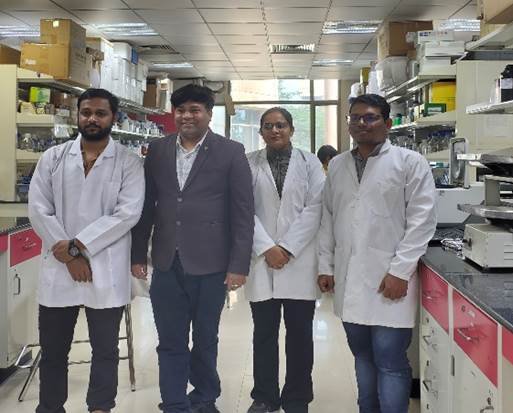
The team consisting of Dr Jagannath Swain, Dr. Jagadis Gupta Kapuganti, Dr Nidhi Yadav, Dr Sanjib Bal Samant implemented a pharmaceutical approach where the wild type (WT) plants were treated with NO donor (SNAP) and NO scavenger (cPTIO) and the NUE was monitored.
By overexpressing phytoglobin, a natural NO scavenger, the expression of high-affinity nitrate transporters (HATs) like NRT2.1 and NRT2.4 was increased, leading to more efficient nitrogen uptake, especially under low NO conditions. The NUE was estimated by studying the shoot nitrogen level, amino acid content and overall plant growth.
This innovative approach diverges from traditional, costly, and environmentally harmful fertilizers. Instead, it genetically and pharmacologically modulates NO levels to regulate HATs, offering a sustainable solution to boost crop yield with reduced nitrogen inputs.
When nitrogen levels are low, plants activate high-affinity nitrate transporters, a process that is dynamically regulated by nitric oxide. The nitrosylation of proteins, triggered by NO, plays a pivotal role in enhancing NUE. Genetic and pharmacological interventions that modify NO levels have been shown to improve plant growth and nitrogen utilization.
This research is supported by the ANRF (erstwhile SERB) established through an Act of Parliament: ANRF, Act 2023.
Dr. Kappuganti points out that the current study offers a promising pathway to develop novel NO scavenging formulations that can be applied to different agroecosystems to improve NUE to reduce the need for nitrogen fertilizers. Their team is trying to identify bacteria that when introduced in the soil can act as NO scavengers in the plants leading to increase of Nitrogen Use Efficiency.