‘Crowning Jewels: The Illustrated Rare Books’ – A Unique Confluence of History and Art
 Formfees
04/02/2025
Formfees
04/02/2025
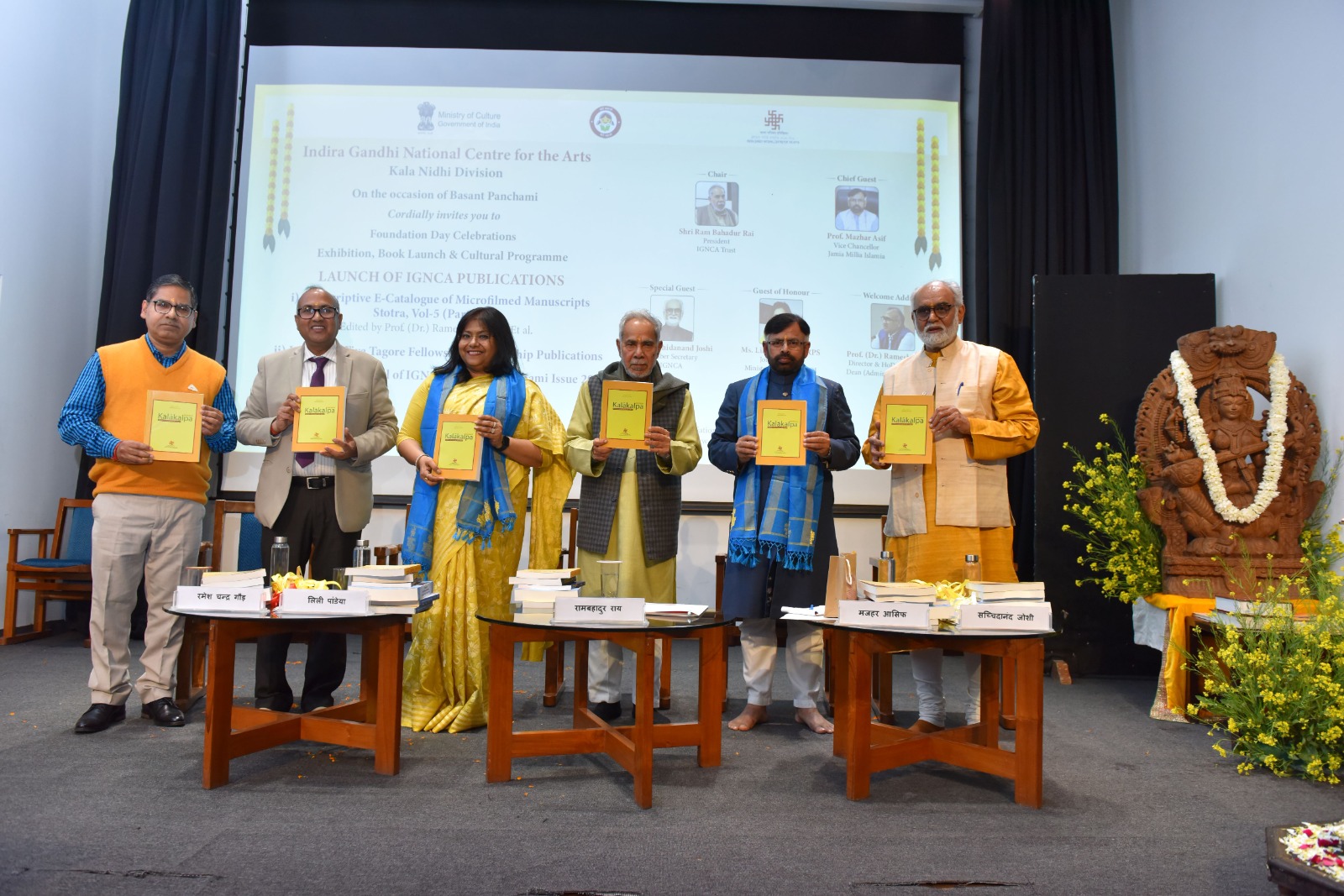

New Delhi: On the auspicious occasion of Vasant Panchami, the Kalanidhi Division of the Indira Gandhi National Centre for the Arts (IGNCA) celebrated its Foundation Day with grandeur. The event featured the release of various publications and cultural programmes. A special exhibition, ‘Crowning Jewels: The Illustrated Rare Books’, was also inaugurated, showcasing rare books and artworks from the 18th and 19th centuries. This exhibition will be open until 10th February.
‘Crowning Jewels: The Illustrated Rare Books’ invites visitors to experience the aroma of old books, the stories behind rare illustrations, and the hidden pages of history. Through paintings, lithographs, engravings, and woodcuts from historical texts, the exhibition revives the beauty of the past. For those passionate about rare books and historical artworks, this is an opportunity to travel back centuries.
Highlights of the Exhibition:
A rare glimpse into ancient texts – Mysterious illustrations hidden within centuries-old books!
Magnificent historical art – Rare depictions of heritage sites, cities, and nature!
A paradise for bibliophiles – Books that are now only found in museums!
This exhibition offers an unparalleled opportunity to witness the artistic treasures preserved within the pages of history.
Publications Released on Kalanidhi Foundation Day:
E-Catalogue of Miniature Manuscripts – Stotra Section Vol. 5 (Parts 1-6), edited by Prof. Ramesh Chandra Gaur and other scholars.
Five publications under the Tagore Fellowship/Scholarship Programme.
The ‘Vasant Panchmi’ 2025 edition of IGNCA’s biannual research journal, Kalakalpa.
The event was presided over by Shri Ram Bahadur Rai, Chairman of IGNCA, with Prof. Mazhar Asif, Vice-Chancellor of Jamia Millia Islamia University, as the Chief Guest. Shri Ram Bahadur Rai remarked that India is witnessing a cultural renaissance, while Prof. Mazhar Asif emphasised that love and knowledge form the essence of Indian culture.
Distinguished guests included Dr. Sachchidanand Joshi, Member Secretary of IGNCA, and Ms. Lily Pandey, Joint Secretary, Ministry of Culture, Government of India, who also shared their insights. Dr. Sachchidanand Joshi remarked that publishing the research reports and findings under the ‘Tagore Fellowship’ enriches the repository of ‘Indian Knowledge Tradition’. Understanding this tradition provides the right context for scholarly pursuits. Archiving, referencing, and digitisation are crucial today, and for such endeavours, we look towards the Kalanidhi Division. Ms. Lily Pandeya congratulated Prof. Gaur and the Kalanidhi Division on its 36th Commemoration, highlighting the integration of knowledge and creative expression in India’s literary heritage and creative economy. She emphasised the need for research, capacity building, and democratising knowledge while addressing AI’s role in literary heritage. She concluded with a wish for Maa Saraswati’s blessings upon all. The welcome address was delivered by Prof. Ramesh Chandra Gaur, Head of the Kalanidhi Division and Dean (Administration), IGNCA.
The event highlighted the remarkable contributions of the Kalanidhi Division in preserving India’s cultural heritage. A large gathering of scholars, researchers, and cultural enthusiasts attended the celebration.